
Can You Use Surplus FR Clothing for Fire Resistant Work?
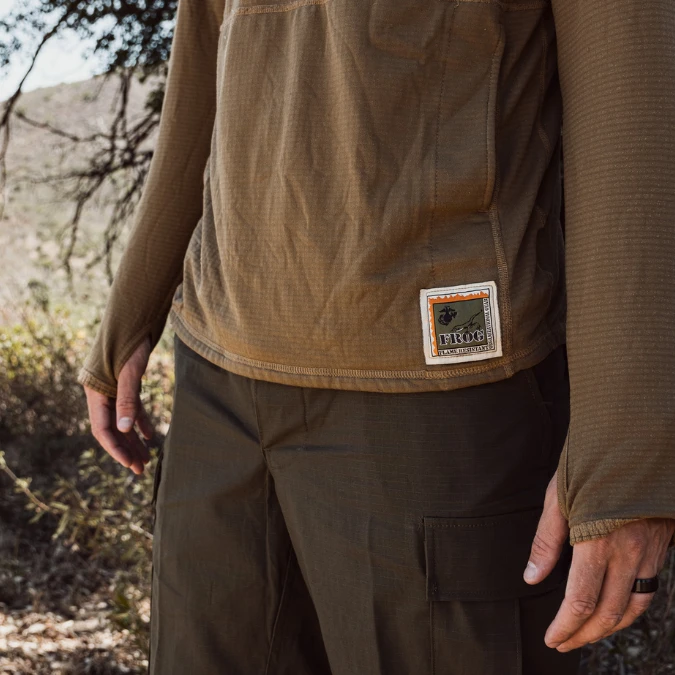
Most people asking about surplus FR want to know one thing: can I wear this instead of paying three hundred dollars for a set of FR workwear?
The answer isn't about the fabric. The fabric is real. It comes down to whether anybody has to approve what you're wearing.
Why surplus FR will not be accepted
On a job site with an FR program. Oil and gas, electrical utility, and petrochemical employers need garments certified to NFPA 2112 or arc-rated to the electrical standards. That certification covers both the fabric and the finished garment, is verified by an independent third party, and puts a certification mark on the label. Military FR was built to a Department of Defense specification: real testing, real document, wrong label.
OSHA works through the employer, not through you. Under 29 CFR 1910.132, the employer runs the hazard assessment and then selects and provides the clothing. You can't satisfy that rule on your own by buying a better shirt. If you need FR for work, buy certified FR from Bulwark, Tyndale, Carhartt FR, or Ariat.
In sanctioned racing. Driving suits have to carry an SFI 3.2A certification with a serial-numbered label sewn in. Porsche Club's rule book says it flat out: military flight suits are not acceptable substitutes for fire-retardant driving suits. It will not pass tech.
Both are label problems, not fabric problems.
When surplus FR is the right buy
Nobody inspects your barn.
Welding and cutting in your own shop. The real hazard at home isn't a missing certification; it's the polyester hoodie. ANSI Z49.1, the welding safety standard, is direct: materials that can melt and cause severe burns should not be worn when welding or cutting. An FRACU or FROG top will not melt onto you.
Spatter is where it falls short. Flash fire and hot slag are different problems, and Z49.1 recommends heavier materials or leather because heavy fabric is harder to ignite. Slag burns pinholes through a combat shirt. Use it as your shirt-and-sleeve layer; add leather for heavy work.
Four things to get right:
- Button the cuffs and collar. Sparks lodge in open sleeves.
- Empty the pockets and don't cuff the trousers. Z49.1 calls out pockets and cuffs as spark traps, and these uniforms are covered in pockets.
- No polyester underneath. The base layer melts even when the shell doesn't.
- Don't weld in a beat-up Grade 3 piece. Frayed fabric ignites easier than sound fabric.
Forge and blacksmith work—same logic, plus scale and hot stock landing on you all day.
Automotive work. Fuel, solvents, torches, and grinders in one bay. This is what the CVC coveralls were issued for, since tank and Bradley crews and aviation ground crews had the same problem.
Burn piles, brush work, and torch work on the place. You're your own safety manager.
Flight suits are the exception.
A surplus CWU-27/P sold to a pilot is the one case where the garment gets used for exactly what it was designed and issued to do.
General aviation has no FR clothing requirement. The FAA does not tell a private pilot what to wear, so there's no certification gate in the way, and the suit in front of you was built and tested for aircrew. We see this most in warbird, aerobatic, and experimental flying.
Racing splits, and this is where people get it wrong.
Sanctioned wheel-to-wheel competition needs an SFI-tagged suit. Single-layer SFI 3.2A/1 suits start around $300 new. Don't improvise here.
Track days, HPDE, and driver education vary by organizer, and plenty run looser rules. If your event allows it, a Nomex flight suit is a real step up from the cotton shirt and jeans most people show up in. Ask first, and know what you have: a single-layer garment with no SFI thermal rating. Better than street clothes, worse than a driving suit.
What is this fabric?
Defender M is the Army FRACU and the Marine FROG: 65% FR rayon, 25% para-aramid, 10% nylon. Woven, lightweight, exceeds ASTM D6413, the vertical flame test.
Nomex is the flight side. The CWU-27/P runs about 92% meta-aramid, 5% para-aramid, 3% conductive fiber. Essentially all aramid, with no melting fiber in it at all. Flight gloves are Nomex too.
The FROG combat shirt is two fabrics in one garment. Defender M sleeves, and a knit torso around 80% modacrylic, 15% Tencel, 5% silver, built to sit under a plate carrier without cooking the wearer. Modacrylic is also inherently flame-resistant, so both halves are real.
Flame-resistant does not mean fireproof.
We held a torch to a FROG top on camera for thirty seconds. It never lit. Pull the flame away, and there was nothing to put out, just char where the fire had been.
FR means three things, all about what the fabric refuses to do. It won't sustain a flame, so it goes out on its own once the ignition source is gone. It won't melt or drip, which matters most and gets talked about least, because polyester and nylon melt into liquid plastic, stick to skin, and keep burning once they're there.
What it does not do is keep you from getting burned. Enough heat gets through to hurt you, and the fabric will char and hole through if you push it. FR buys you the seconds to get away. It is not armor.
Some of what's written about this gear online will leave you more confused than when you started. A product description is making the rounds that says the fabric will not catch fire when exposed to flames, then says it will burn, then says it will not catch fire. That's one sentence contradicting itself twice, and it's a big part of why people walk in thinking FR means fireproof.
Does used FR still work?
Yes, and this is the biggest misconception on surplus FR.
Treated FR starts as cotton and gets a flame-resistant finish applied to it. Inherent FR is built into the fiber when it's made. Military FR is inherent, so aramid and FR rayon can't be laundered out or worn off. A used FRACU that came back through the wash forty times has the same fiber content it had when new.
What goes wrong is the garment. Holes, thin spots, blown seams, and frayed edges all cut into it, and frayed fabric ignites more easily than sound fabric. Buy Grade 1 or Grade 2 for anything you're counting on.
Wash it plain—no chlorine bleach, no fabric softener. Softener leaves a flammable residue on the fibers.
How do I tell FR from a regular uniform on the rack?
Read the tag. An FRACU and a standard ACU or OCP blouse look close at arm's length.
Fiber content is the giveaway: 65% rayon with para-aramid is FR, and a fifty-fifty cotton-nylon split is not. Look for the nomenclature calling out flame resistant, and check the NSN, because FR and non-FR versions of the same uniform carry different stock numbers.
Anything sold as FR with no fiber content and no stock number is a guess.
The questions we get most
Can I wear military surplus FR clothing for work? Only if nobody has to approve it. Employers running an FR program need NFPA 2112-certified or arc-rated garments with a certification mark, and military FR doesn't carry one. For your own shop, property, or side work, it's real flame-resistant clothing at a fraction of the price.
Does surplus FR meet NFPA 2112? No. That standard requires third-party certification of the fabric and the finished garment with a mark on the label. Military FR is built to a Department of Defense specification instead.
Does flame resistant mean fireproof? No. FR means the fabric self-extinguishes, won't melt, and won't drip. It doesn't mean fire can't damage it or that heat can't reach you through it. It means the garment won't burn with you inside it.
Does surplus FR lose its flame resistance after washing? Not the military stuff. It uses inherent fibers, where the flame resistance is part of the fiber and can't wash out. Skip bleach and softener anyway, and check for holes and fraying.
Can I use a military flight suit for racing? Not for sanctioned competition, since driving suits require SFI 3.2A certification with a serial-numbered label. For track days and HPDE, it varies by organizer, and a Nomex suit beats street clothes if your event allows it. Ask first.
Can I wear a Nomex flight suit for flying? Yes. General aviation has no FR clothing requirement, so it's a personal choice, and the suit was designed and issued for aircrew.
Can I weld in a surplus FR uniform? For hobby work in your own shop, it's a solid shirt-and-sleeve layer, and it beats anything that melts. Add leather for heavy spatter, button the cuffs and collar, empty the pockets, and skip synthetic base layers.
Is FRACU the same fabric as FROG? On the main pieces, yes. Both use Defender M. The FROG combat shirt is the exception, since only its sleeves are Defender M.
Can I treat FR uniforms with permethrin? No. Wearers are not to treat FR ACUs with the standard military permethrin repellent. Use a skin repellent or separate treated non FR layers.
We stock the FROG combat shirt, the OCP FR uniform shirt and pants, CVC coveralls, the FREE cold weather layers, and Nomex flight gloves. Please tell us what you're using it for when you call, and we'll tell you straight whether surplus is the right answer.
MILITARY GEAR GUIDES

How to Prepare for an AI Disruption
Prepping for an AI disruption takes the same two things as any emergency: gear for the first couple...
Army Navy Outdoors: A Genuine Military Surplus Online Store
Revised October 2026 Army Navy Outdoors is a military surplus store. Not a tactical brand. We buy g...
How to Ship to a Military Base Address and not get it returned
This guide comes from our experience and frustration fixing countless addresses, so it gets to the p...
Can You Use Surplus FR Clothing for Fire Resistant Work?
Most people asking about surplus FR want to know one thing: can I wear this instead of paying three...

ACU Camo (UCP): Why the Army's Most Hated Pattern Is the Best Value in the Surplus Bin
This is the ugliest camo the Army has ever fielded. It's also one of the best values on our shelf. H...
Surplus Ammo Cans: What the Rust Means and How to Check One Before You Buy
Every surplus store sells ammo cans, and every prepper and shooter buys them. So most of what's writ...