
How Much Weight Should You Pack in Your Emergency Bag
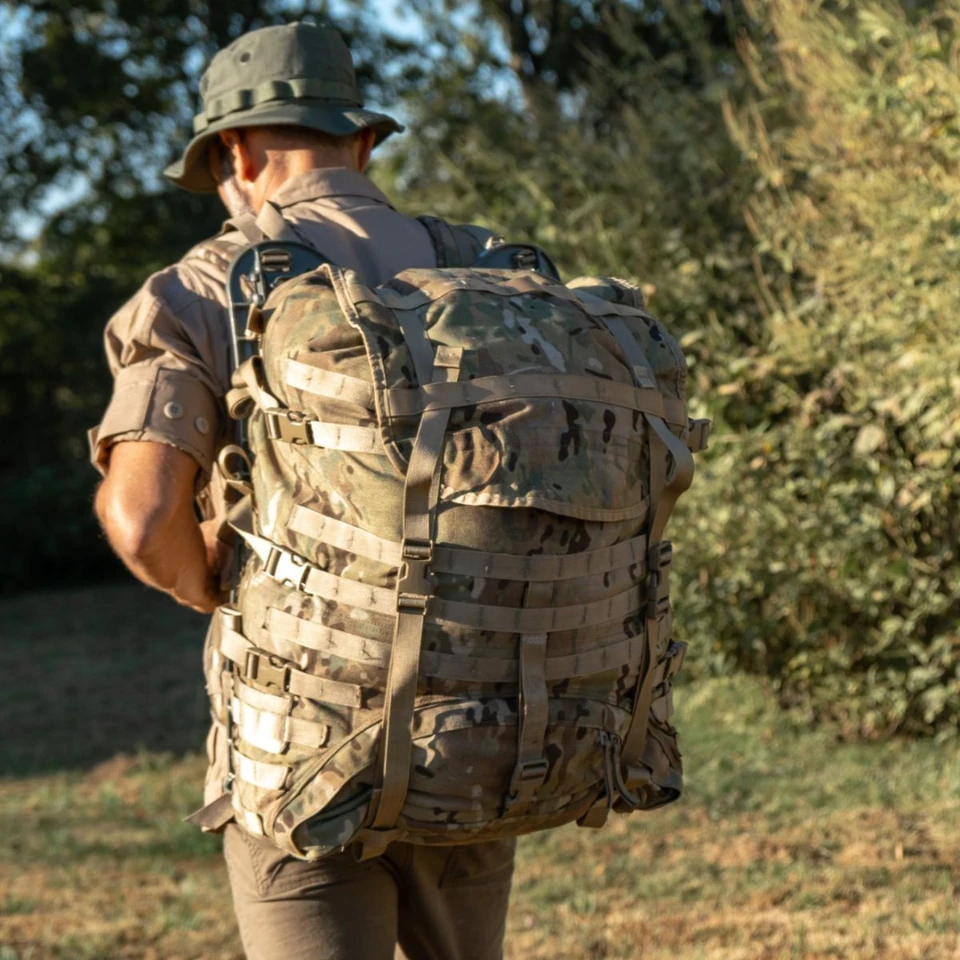
Most people pack a bag based on how much they want to carry, not how much they can carry, and there's a big difference between the two. Especially when you're moving through an emergency with stress, adrenaline, and uncertainty working against you. It feels natural to want more gear, more food, more options. The problem is that a bag that's too heavy doesn't just slow you down. It wears out your hips, burns through your energy, and limits how far you can travel. And more often than not, when you finally stop and sort through it, half of what's in there didn't need to be there in the first place.
The most common weight mistakes we see:
- Confusing how much a bag can hold with how much you should put in it. Military bags were built to handle far more weight than commercial bags, but that's a structural advantage, not a packing instruction.
- Packing for how strong you feel standing in your living room, not for how you'll feel two hours into moving with that load on your back or in your hands.
- Ignoring the duration. Carrying 60 lbs for ten minutes and carrying 60 lbs for three hours are completely different conversations.
- Overpacking because the bag has room, not because the gear is necessary.
Before you pack anything, sort your gear into three piles:
- Have to have: the things you genuinely cannot survive without.
- Feel I need: useful items that add real value but have some flexibility.
- Want: everything else.
Fill the bag from the first pile. Look hard at the redundancies in the second pile and take only what genuinely earns its weight. Take nothing from the third pile. If the bag is still too heavy, go back through the second pile again. This process takes longer than just stuffing a bag, and that's exactly why you do it at home on a Sunday, not the night before a storm.
The MOLLE II Rucksack: An Example
The military built these rucksacks to be overloaded. Soldiers carry ammo, armor, water, and weapons, and the frame handles it. But just because it can carry 100+ lbs doesn't mean you should plan on it.
The rule of thumb: one-third of your body weight.
- A 180 lb person should plan around 60 lbs.
- That's the load you can sustain for hours and rough terrain without breaking yourself down before you arrive.
- Pack heavy items close to your back and high in the main compartment, with lighter gear toward the outside and bottom.
- When it's dialed in, 50 to 60 lbs feels manageable. The frame and hip belt do the work, not your shoulders.
- The same weight in a civilian frameless backpack will wreck your shoulders in an hour.
The 3-Day Assault Pack: Built for This System
The MOLLE II 3-Day Assault Pack was designed to attach directly to the rucksack, and it can be used separately when needed. This is one of the most practical features of the whole system.
- 20 to 30 pounds is ideal for basic use. The pack can hold more, but it won't be comfortable. All the weight sits on your shoulders.
- The waist strap is really a belly belt to keep the pack from bouncing around. It's not made to distribute any weight.
- Clips onto the ruck when you need full capacity.
- Detaches when you need to move light. Leave the ruck at camp or in the vehicle and take only what you need.
- Makes a great bag for kids. Pack it with their personal clothing and items, then clip it onto an adult's ruck if they get tired or the terrain gets tough.
Using a MOLLE II rucksack? See our full breakdown of the bag, how we set it up, and where to get genuine surplus: The Best Bags for Emergency Prep, and How to Pack Them Right.
The GI Duffel
The weight question for the duffel is really about who's carrying it and how.
- 70 lbs is fine if it's going straight into a vehicle or onto a cart.
- 50 lbs is the practical limit for most adults carrying it any real distance.
- 30 lbs is the right target for smaller adults and older family members.
- Kids' bags should be built around what they can carry without slowing anyone down. 15 lbs for a 10-year-old is useful. 30 lbs is a liability.
Using GI duffels as your home and vehicle cache bags? See how we set up the full two-bag system: The Best Bags for Emergency Prep, and How to Pack Them Right.
The Practical Test
Pack the bag. Pick it up. Walk around the block with it. Do that before you ever need to. Most people discover fast that what feels reasonable on the floor feels very different after 10 minutes of moving. Better to find that out on a Sunday afternoon than during an evacuation.
Build each bag's weight around the weakest carrier in your group, not the strongest. A bag one person can carry easily but another can't move is a problem when you need to split up or move fast.
All gear mentioned in our guides is available at ArmyNavyOutdoors.com. Genuine military surplus, inspected and ready to go.
MILITARY GEAR GUIDES

How to Prepare for an AI Disruption
Prepping for an AI disruption takes the same two things as any emergency: gear for the first couple...
Army Navy Outdoors: A Genuine Military Surplus Online Store
Revised October 2026 Army Navy Outdoors is a military surplus store. Not a tactical brand. We buy g...
How to Ship to a Military Base Address and not get it returned
This guide comes from our experience and frustration fixing countless addresses, so it gets to the p...
Can You Use Surplus FR Clothing for Fire Resistant Work?
Most people asking about surplus FR want to know one thing: can I wear this instead of paying three...
ACU Camo (UCP): Why the Army's Most Hated Pattern Is the Best Value in the Surplus Bin
This is the ugliest camo the Army has ever fielded. It's also one of the best values on our shelf. H...
Surplus Ammo Cans: What the Rust Means and How to Check One Before You Buy
Every surplus store sells ammo cans, and every prepper and shooter buys them. So most of what's writ...