
Surplus Ammo Cans: What the Rust Means and How to Check One Before You Buy
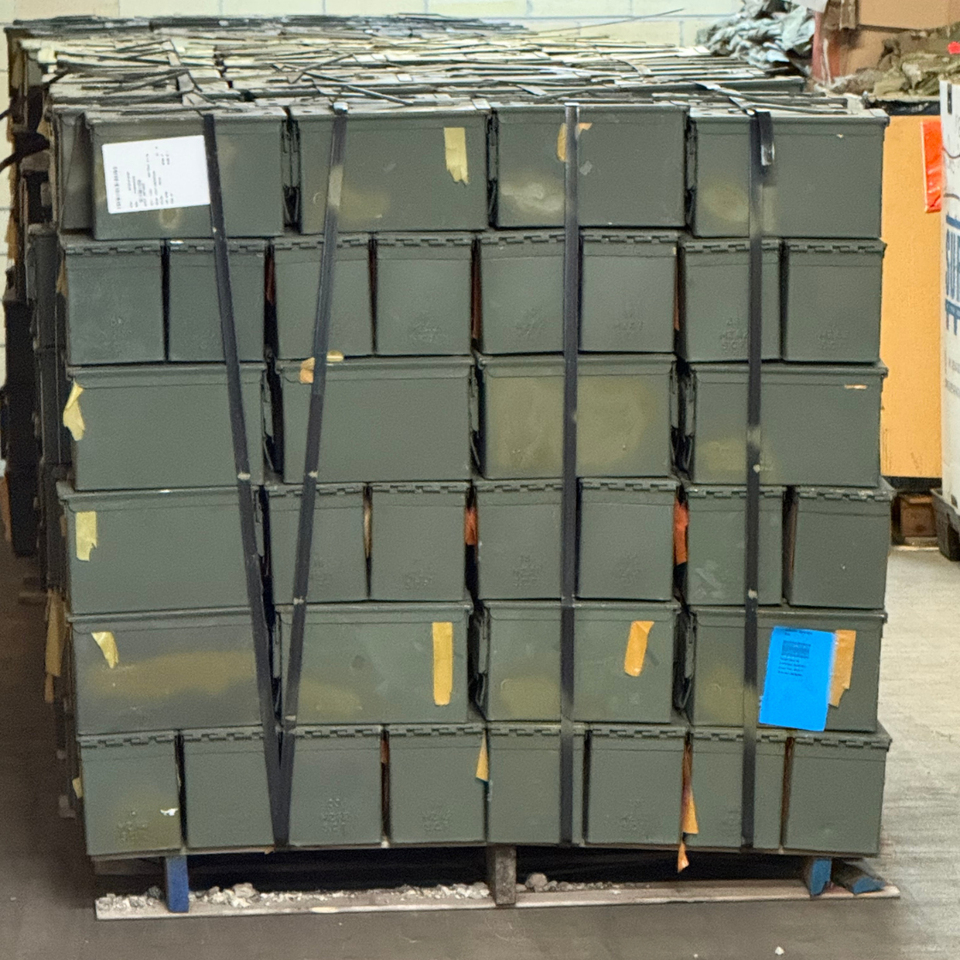
Every surplus store sells ammo cans, and every prepper and shooter buys them. So most of what's written about them is a sales pitch. Here's the stuff nobody tells you at the register: why they rust, why the price moves, and how to tell a good used can from a tired one before you hand over any money.
Why is there rust inside a used ammo can?
It's normal, and it's almost always just on the surface.
These cans lived outside. It rains in the field a lot, and a soldier will seal gear up wet or leave the lid unlatched. The can traps that moisture inside, and over a few years you get light surface rust. That isn't a defect. It's proof the can did its job out in the weather.
Surface rust sands right off. A little sandpaper, a shot of primer, a coat of paint, and it looks new. The only rust worth worrying about is rust that's eaten into a welded seam or pitted the sealing lip where the gasket presses. Rust on the flat panels is just cosmetic.
Why does the price keep changing?
Steel. The wholesale cost of these cans fluctuates with the scrap metal market, not with the can's quality.
For long stretches, scrap steel was worth enough that it paid better to crush these cans for the metal than to sell them whole. The cheap can in the bin is a genuine piece of U.S. steel that nearly went to the crusher. When a can costs more this year than last, that's the reason. It's the metal, not the merchandise.
How do you check a can before you buy it?
Two things. The body and the seal.
For the body, ignore the surface rust and look at the seam and the sealing lip. Solid welded seam, clean lip, and the can is sound. Dents and scuffs on the panels don't affect anything.
For the seal, run a bare, dry finger around the gasket. If it comes back black and keeps coming off, or you see cracks and flat spots, the rubber is breaking down, and the seal is shot. Test it dry. If someone wiped that gasket with oil or CLP, it'll smear black too, and that tells you nothing.
Two things people get wrong here. First, the chalky white powder you'll see on many gaskets isn't rot. It's mold-release talc left over from manufacturing, and it usually means the gasket is unused or well preserved, not going bad. Leave it or wipe it off; either way, it's fine. Second, don't oil the seal to "protect" it. Petroleum products like CLP, WD-40, or gun oil break down rubber over time, swelling and cracking it. The people who ruin their gaskets are usually the ones babying them with oil. If you lube at all, use silicone, and go light. A clean, dry gasket in good shape needs nothing.
A dead gasket is not a dead can. For the 50 cal, drop-in replacement seals are cheap and easy to find. For other sizes, it's more hit-or-miss, so people cut a new gasket from a rubber sheet or run a bead of silicone in the lid channel, which works fine. Either way, you're looking at a few dollars and a little time, and a fresh seal in an old can is as good as a new can.
Are these cans still any good for storage?
Yes, with one honest caveat about the word "waterproof."
A can with a good gasket is water-resistant, not submersible. It sheds rain, splashes, and humid air all day, which is what protects documents, electronics, and tools in a closet or a truck bed. It is not built to sit underwater, so don't count on it in a flood.
Seal it on a dry day, because a can closed up in humid air traps that moisture inside.
Do you really need desiccant, and how much?
Here's the honest version, because this is where people go overboard.
If you're storing dry stuff in a sealed can in a normal indoor spot, you barely need any. One or two small silica packs in a 50-cal is plenty. The whole point is to mop up the little bit of humidity you trapped when you closed the lid, not to run a dehumidifier.
The mistake is dumping in a fistful and forgetting them. A silica pack fills up and quits, and a saturated one just sits there holding moisture against the steel instead of pulling it away. So a pile of spent packs is worse than two fresh ones.
Keep it simple. Two small packs in a 50 cal, one in a 30 cal, a few in a 40mm. Bump it up only if you're in a humid climate, or the can lives in a garage or shed. Swap them or dry them out a couple of times a year. And the more you open the can, the sooner they're spent, because every time you crack the lid, you let fresh, damp air back in. A can you seal and leave alone holds up a long time on one set. Once you're in and out of every week, they run through them faster, so check those more often. If you want to know at a glance when they're done, buy the color-changing kind. Everything past that is overkill.
Common Ammo Can Questions
Is surface rust on a surplus ammo can a problem? No. It's from wet-field use and is cosmetic. Sand it, prime it, paint it, and the can is back to new. Only rust in the welded seam or on the sealing lip actually matters.
How do I know if the seal is still good? Rub the gasket with a dry finger. Crumbling rubber, black that keeps coming off, or cracks and flat spots mean it's done. On a 50 cal, a fresh gasket is a cheap, easy swap. On other sizes, you may have to cut one from a rubber sheet or lay a silicone bead, but either way, a bad seal isn't a reason to walk away from an otherwise solid can.
Are surplus ammo cans waterproof? Water-resistant, not submersible. Good for rain, splash, and damp storage. Not built to be dropped in floodwater and stay dry inside.
How much desiccant do I need in a 50 cal ammo can? Not much. Two small silica packs handle a 50 cal storing dry gear indoors. One does a 30 cal. You're drying the bit of air you sealed inside, not running a dehumidifier, so a fistful of packs is wasted. Swap or dry them out a couple of times a year, and sooner if you open the can often, since each opening lets fresh, damp air back in.
What's the white powder on the gasket? It's mold-release talc from when the gasket was made, not a sign the seal is failing. People see it and assume the rubber is breaking down, but it's usually the opposite: a gasket that's unused or well preserved. Wipe it off or leave it. What tells you a seal is actually bad is crumbling, cracks, or black that keeps rubbing off a dry finger.
Why are ammo can prices different from last time? They track the scrap steel market at the wholesale level. When steel is up, cans cost more, because whole and crushed-for-scrap are competing for the same can.
Bring one to the counter if you're not sure about a seam or a seal. We check the gaskets before these go out the door, and we'll show you the difference between rust that matters and rust that doesn't.
MILITARY GEAR GUIDES
Army Navy Outdoors: A Genuine Military Surplus Online Store
Revised October 2026 Army Navy Outdoors is a military surplus store. Not a tactical brand. We buy g...

How to Ship to a Military Base Address and not get it returned
This guide comes from our experience and frustration fixing countless addresses, so it gets to the p...
Can You Use Surplus FR Clothing for Fire Resistant Work?
Most people asking about surplus FR want to know one thing: can I wear this instead of paying three...

ACU Camo (UCP): Why the Army's Most Hated Pattern Is the Best Value in the Surplus Bin
This is the ugliest camo the Army has ever fielded. It's also one of the best values on our shelf. H...
Surplus Ammo Cans: What the Rust Means and How to Check One Before You Buy
Every surplus store sells ammo cans, and every prepper and shooter buys them. So most of what's writ...

What does mil-spec mean?
Real mil-spec cites a document number. "Military grade" cites nothing. That's the whole test, and it...