
What does mil-spec mean?
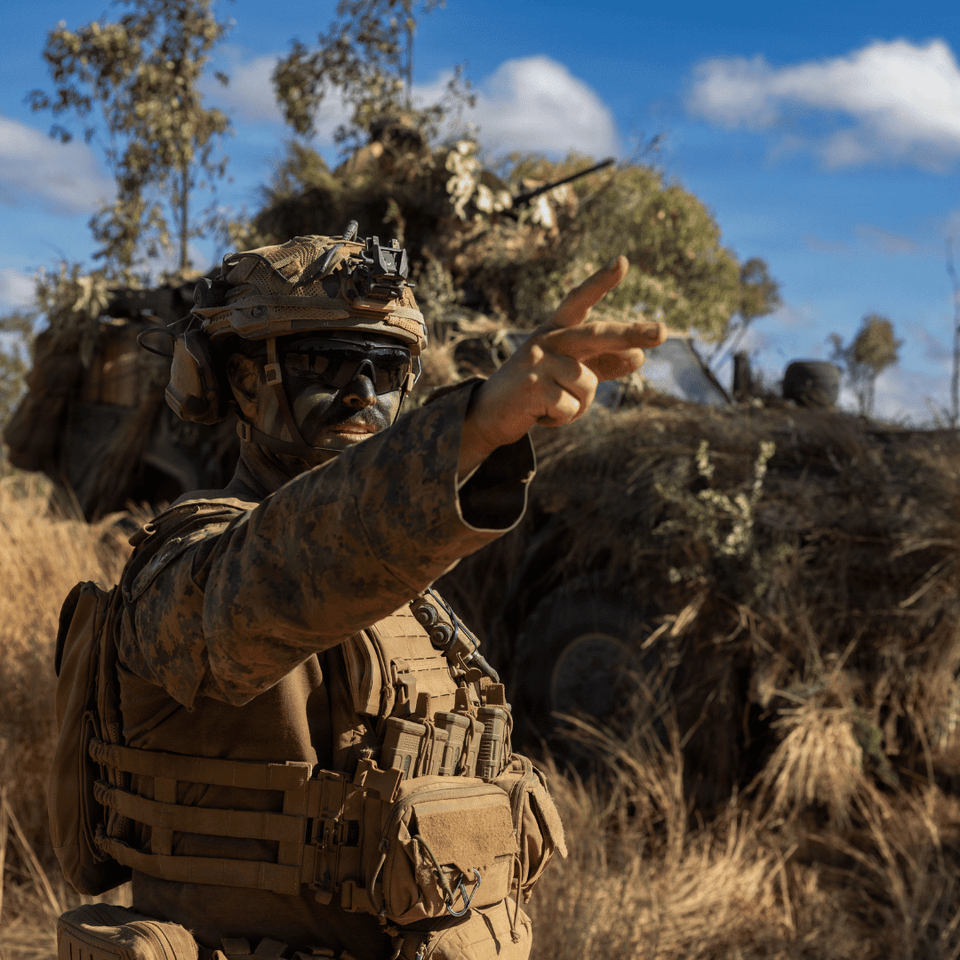
Real mil-spec cites a document number. "Military grade" cites nothing.
That's the whole test, and it takes maybe five seconds on any product page. Military grade is a phrase somebody in marketing made up to sell things on the open market. There is no standard behind it. Mil-spec is a different animal, because there's an actual written document, a testing process, and a contract, and gear has to earn its way through all of it. Here's how that works.
What does mil-spec actually mean?
Mil-spec is short for military specification. An item built to mil-spec meets a written set of requirements the military laid out as the customer, and it was verified against those requirements before a single unit was accepted. Nothing vague about it. Somebody wrote the requirement down, and somebody else had to prove the gear met it before the government paid.
The process starts with a need. The military identifies a problem, then goes to manufacturers one of two ways.
Sometimes the request is open-ended: here's our issue, show us what you can do, and we'll compare what comes back. That's a performance specification, written MIL-PRF. It states the result the item has to achieve and how that result gets verified, and it leaves the engineering up to the manufacturer.
Other times the request is exact: here's the item, here are the materials and the construction, build it and we'll see whose is better and at what price. That's a detailed specification, written MIL-DTL, and it spells out the design itself.
Either way, the requirement isn't optional. The difference is how much room the manufacturer gets in reaching it. On a detail spec, almost none.
Both come with testing. Lab work and field trials before the item is accepted, plus inspection on the production line while it's being built. Somebody is checking as it comes off the machines.
For a buyer, that's the value. The gear was built to solve a problem the military already had, under a document nobody could ignore, and it was tested until it worked.
If it's built to a spec, why do different companies make the same item?
Because the spec belongs to the government, not the manufacturer. Any company that can meet the requirements is allowed to bid.
The FILBE pack is a clean example. The Marine Corps awarded the contract in 2011 to two companies on the same day, Eagle Industries and Propper, through an open competition. The main pack was built around a frame design the government owned, and the frames themselves came from yet another manufacturer. One stock number covered it all, no matter whose factory the pack came out of.
Not everything works that way. When a company develops a design on its own money and holds the rights, the government doesn't own the drawings and can't hand them to a competitor. Those items stay with one manufacturer until the government buys the design outright or replaces it.
This is also where the lowest bidder myth falls apart. Yes, the government takes the lower price. What the joke leaves out is that every bidder had to hit the same specification and pass the same testing before price ever entered the conversation. Price picks the winner among companies that already cleared the quality bar.
Why is there no brand name on military gear?
Sometimes the contract calls for exactly that. The government specifies no maker's mark, and you get an item with nothing on the outside and occasionally no label inside either.
The reasons are practical. Gear used by mixed national teams doesn't need to announce who issued it. Neither does gear you'd rather not have identified if it gets left somewhere.
The part almost nobody knows is that origin marking is an import rule. Federal law requires every article of foreign origin brought into the United States to be permanently marked with its country of origin. Nothing in that law touches an item that never crossed a border.
So a blank tag on American-made surplus is common. A missing "Made in USA" doesn't mean the gear came from overseas. Often it means the opposite.
How do you tell if something is really military issue?
Turn it inside out and read the label.
Fair warning before you start: the format has never been standardized. Contract labels have been shifting since 1907, so you're hunting for individual fields rather than one fixed layout. Older gear, newer gear, and gear from different branches all look different.
The fields worth finding:
The nomenclature. The official item name, which is almost never what anyone calls it in the field.
The NSN. Thirteen digits. The first four tell you what family the item belongs to before you read another word. In surplus, you'll see the 8400 series constantly, because that's where clothing and individual equipment live.
The contract number. This ties the item to a specific award and a specific manufacturer. On modern clothing and gear, it often opens with SPE1C1, which is DLA Troop Support in Philadelphia.
The contractor. Sometimes there, sometimes left off on purpose.
The specification number. Not on everything, but when it is there, that's the document the item was built to.
Our used FILBE rucksack is a good one to practice on. The main bag carries NSN 8465-01-600-7911 and was built to detail specification DTL-17001A0001, and every component in the system has its own paper trail you can follow.
That's the practical difference. A mil-spec item points back at documents you can look up. With "military grade," there's nothing to look up.
Is military surplus actually good quality?
For the right buyer, it's the best value in outdoor gear.
You're getting something built in the USA to a military specification and tested for combat use, at a fraction of what that quality costs new. Our used FILBE rucksack runs less than $150. New issue would cost three times that, and the pack is going to get dirty the first time you take it out anyway.
Everything we sell gets inspected before it ships, and we repair or rebuild where needed. Our Army Airborne rucks run on the same frame family as the Marine system, and we build those out with new factory parts.
Commercial gear wins for different reasons. Buy commercial when you want the most modern design, or features the military never asked for, like ultralight weight or back ventilation. Military gear was never meant to be pretty. It works, and it keeps working.
So why do soldiers say their gear is junk?
Because soldiers destroy things. It comes with the job.
We see broken pack frames constantly. Not because the frame was badly built, but because it got loaded past capacity, thrown off the back of a truck, dropped on concrete every time it came off, and put away wet. Outside of special operations, most troops use gear hard and store it harder. Very few clean and maintain their equipment the way the manual says to, and small problems nobody fixes before the next field exercise turn into big ones.
No civilian use repeats that cycle. Gear that survived it and still has life left is gear you can trust.
Is it legal to buy military surplus?
Yes. If a legitimate dealer has it on the shelf, it cleared the government's own screening long before it reached the market.
Every item in the DoD supply system carries a demilitarization code that determines what happens to it at disposal. Anything coded DEMIL-D has to be destroyed and is never sold to the public. That's how IFF equipment and similar items get handled. The government makes that call item by item, before a seller ever sees it.
We buy from the government with invoices and a documented chain of custody, not out of the back of somebody's truck. If we have it, it's clear.
The questions we get most
What does mil-spec mean? Mil-spec is short for military specification. It means an item was built to a written set of requirements the military laid out as the customer, and verified against them before acceptance. A performance spec (MIL-PRF) states the result the item has to achieve and how that gets verified. A detail spec (MIL-DTL) states the materials and construction directly. Both carry lab testing, field testing, and production-line inspection before the military accepts the item. "Military grade" is a marketing phrase with no document behind it.
How can you tell if military gear is genuine issue? Read the label. Look for a National Stock Number, a contract number, and where present a specification number. The 8400 series NSN prefix covers clothing and individual equipment, and modern contract numbers on that gear often begin with SPE1C1, meaning DLA Troop Support in Philadelphia. Label formats were never standardized, so hunt for the fields rather than a set layout. Gear marked only "military grade" carries none of this.
Is military surplus good quality? Generally yes, because it was built to a specification and tested before acceptance. Used surplus should be inspected and repaired before resale, which is what a real dealer does. Go commercial instead when you want ultralight weight, back ventilation, or a particular look, since military gear puts durability ahead of everything else.
What does Grade 1 surplus mean? Grade 1 is essentially new. Never washed, never fielded, often never issued at all, though it may show storage marks or a name in the tag. Grade 2 is normal field use with plenty of service life left. Grade 3 needs repair. The full breakdown is in our Surplus Condition Guide.
Is military surplus legal to own? Yes. Every item gets a demilitarization code before disposal, and anything restricted is destroyed rather than sold. Whatever reaches the surplus market was already cleared for release, and reputable dealers buy through documented government sales.
Does surplus camo still have bug repellent in it? Assume it doesn't. The military has factory-treated combat uniforms with permethrin for years, but the treatment is rated for roughly 50 launderings, which is the expected lifetime of the uniform. Anything that came back as surplus is past that window. We sell these as clothing. If bite protection matters for what you're doing, treat the garment yourself with an over-the-counter clothing spray.
Call us if you're trying to work out whether something is real issue or just built to look like it. We've been sorting that out at the counter since 1972.
MILITARY GEAR GUIDES
Army Navy Outdoors: A Genuine Military Surplus Online Store
Revised October 2026 Army Navy Outdoors is a military surplus store. Not a tactical brand. We buy g...
How to Ship to a Military Base Address and not get it returned
This guide comes from our experience and frustration fixing countless addresses, so it gets to the p...
Can You Use Surplus FR Clothing for Fire Resistant Work?
Most people asking about surplus FR want to know one thing: can I wear this instead of paying three...

ACU Camo (UCP): Why the Army's Most Hated Pattern Is the Best Value in the Surplus Bin
This is the ugliest camo the Army has ever fielded. It's also one of the best values on our shelf. H...
Surplus Ammo Cans: What the Rust Means and How to Check One Before You Buy
Every surplus store sells ammo cans, and every prepper and shooter buys them. So most of what's writ...
What does mil-spec mean?
Real mil-spec cites a document number. "Military grade" cites nothing. That's the whole test, and it...